This report, issued in August of 2026, highlights the work of the Senate in the 2025-2026 legislative session.
*If the document doesn’t load, download by clicking the link below.
State Senator

Cindy F. Friedman was elected to the Massachusetts Senate on July 25, 2017, to represent the Fourth Middlesex District, which includes Arlington, Billerica, Burlington, Woburn, and precincts 1-2 and 4-7 of Lexington. Prior to becoming a state Senator, Cindy worked as a public school teacher, an executive in the high-tech industry, and later served for nearly a decade as chief of staff to the late Senator Ken Donnelly.
Always a straight-shooter and a zealous advocate for the people of the Commonwealth, since her election Cindy has distinguished herself as a thoughtful and policy-oriented member of the Senate.
Read more
General Resources:
Contact Senator Friedman’s Office
Office Hours with Senator Friedman
Press Releases & Updates
Legislation Filed by Senator Friedman
District & Statewide Contact Information
Legislative Resources
Voter Information
Veteran’s Resources
State Government Links
Federal Government Links
Organizations of Interest
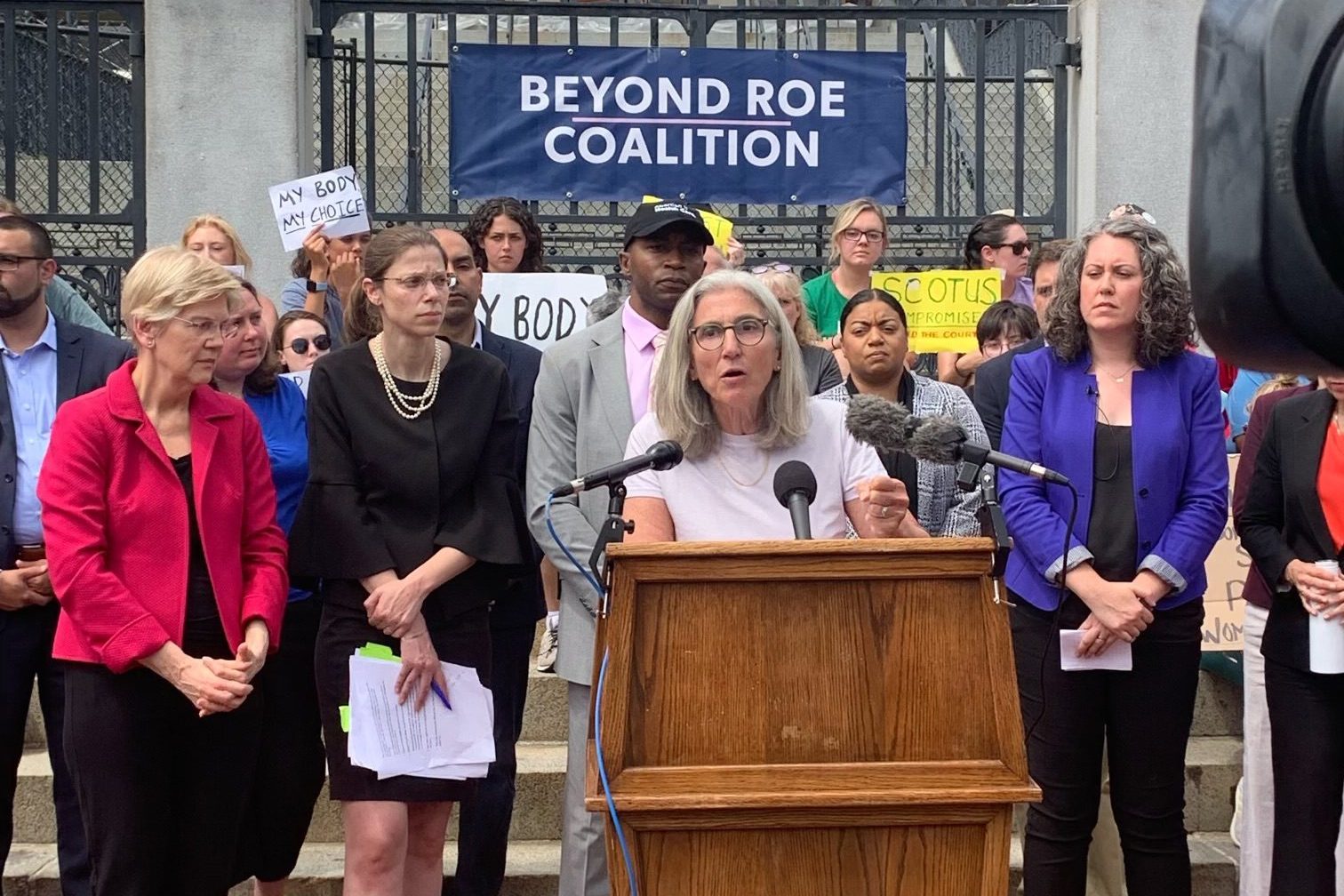
The top priorities that Cindy fights for in the Massachusetts Senate include:
Civil Rights
Criminal Justice
Education
Environment
Mental Health and Addiction
Health Care
Housing
Labor and Workforce Development
Protecting our Seniors
Transportation
Women’s Health
Veterans
This report, issued in August of 2026, highlights the work of the Senate in the 2025-2026 legislative session.
*If the document doesn’t load, download by clicking the link below.
Landmark Law Strengthened Protections for Patients and Providers, Reinforced Massachusetts as a National Leader in Reproductive Health Care
(BOSTON—8/7/2026) One year after the Legislature strengthened Massachusetts’ Shield Law, the Commonwealth continues to lead the nation in protecting reproductive and transgender health care providers and in ensuring patients can access legally-protected care, despite continued attacks on health care rights at the federal level.
The updated law, signed on August 7, 2025, expanded legal protections for health care providers, patients, pharmacists, and insurers involved in reproductive and gender-affirming care. It also strengthened safeguards for telehealth services, enhanced patient privacy protections, and ensured Massachusetts providers would not face legal consequences for providing care that is lawful in the Commonwealth.
With a bipartisan vote, the Legislature took action immediately after attacks on reproductive and transgender rights escalated on multiple fronts, including executive orders from the Trump Administration, federal funding freezes for care providers, a Supreme Court decision ruling against transgender care, and lawsuits brought by other states against physicians providing reproductive health care.
“As the federal government continues to threaten Massachusetts residents’ right to care, this law has served as an essential guardrail, protecting patients and providers when they need it most,” said Senate President Karen E. Spilka (D-Ashland). “We have shown that in Massachusetts, we will not discriminate against anyone based on the care they seek or provide. This is what it looks like to stand firm when others in Washington try to erode our residents’ freedoms. For someone driving hours to get care that’s banned back home, or a doctor who just wants to treat their patient without looking over their shoulder, this law is the difference between fear and safety.” … Read more.
Ensures Access to Abortion Care is Allowed After 24 Weeks of Pregnancy
(BOSTON—7/31/2026) Today the Massachusetts Legislature voted to expand reproductive healthcare for Massachusetts residents by removing restrictions on abortion after 24 weeks of pregnancy.
According to Reproductive Equity Now, under current law, dozens of Massachusetts patients each year are forced to leave the state to access abortion care after 24 weeks, even in cases involving devastating diagnoses or risks to the patient’s life.
The decision to terminate a pregnancy is often in response to a medical emergency or a diagnosis incompatible with life. The legislation—H.5595, An Act prioritizing patient access to care—ensures that the decision to have an abortion later in pregnancy remains between a patient and their health care providers, without interference from politicians or government.
“Massachusetts residents deserve to have access to the care they need as determined through consultation with trusted, trained medical professionals, without interference from individuals wholly separate from the care of patients and the practice of medicine,” said Senator Cindy F. Friedman (D-Arlington), Senate Chair of the Joint Committee on Health Care Financing. “This change in language ensures that the intent of our law is clear — these sensitive and serious decisions should only be made between a patient and their provider. No one should have to leave Massachusetts to receive essential reproductive health care, and I am proud to vote in favor of this legislation that will strengthen our state’s commitment to reproductive freedom.”
This legislation builds off of previous work of the Legislature to prevent the federal government and other states from interfering with legally-protected health care in Massachusetts, commonly referred to as the Shield Act and Shield Act 2.0. … Read more.
Legislation establishes statewide standards governing interactions between state, local and federal immigration enforcement
(BOSTON—7/30/2026) Today the Massachusetts Legislature passed sweeping legislation to protect residents from overreach by federal immigration authorities and to ensure that local and state law enforcement are not involved in federal immigration enforcement. If signed into law, the legislation would create among the strongest protections in the nation for residents who have immigrated to their communities.
The final bill, An Act promoting rule of law, oversight, trust and equal constitutional treatment—known as the PROTECT Act—strengthens due process protections; limits civil immigration enforcement in courthouses, public school grounds, hospitals, and other sensitive locations; expands protections for victims of crime; and increases transparency, accountability, and clarity for correctional facilities and law enforcement relative to civil immigration enforcement. The PROTECT Act was originally filed by the Black and Latino Legislative Caucus, with the goal of offering feasible policy options to address growing concerns about federal overreach in Massachusetts.
“Since the beginning of President Trump’s second term, ICE and Border Patrol agents have continued to harass and disappear innocent Americans with total impunity—a reckless approach that has led to the deaths of American citizens and legal residents, and to children being separated from their families. Those actions have immigrants in Massachusetts living in fear as they go to work or bring their children to school, and they jeopardize the trust that local law enforcement has worked hard to build,” said House Speaker Ronald J. Mariano (D-Quincy). “That’s why this legislation is so important, as it takes steps to ensure that all residents in Massachusetts are treated equally under state law, and to protect our communities through practical, thoughtful measures.… Read more.
Bill Ensures Compliance with Independent Court Appeals Process, Aligns with Constitutional Requirements
(BOSTON—7/30/2026) The Massachusetts Senate today passed legislation that increases residents’ access to information about how decisions are made inside the Legislature and the Governor’s office, along with critical free press protections that allow journalists to protect their sources. Senator Cindy F. Friedman (D-Arlington) voted in favor of the legislation.
For the first time, the bill writes into the state public records law that the public has a right to know about key legislative records, such as vote tallies, salaries of elected officials and staff, ethics disclosures, operating expenditures, and contracts.
The legislation—S.3200, An Act promoting transparency and public access in state government—also opens up access to records created by the Office of the Governor. The transparency measure has earned the support of several groups who advocate for greater access to government and the promotion of democracy, including the Massachusetts Newspaper Publishers Association, Common Cause Massachusetts, and the ACLU of Massachusetts.
“At a time when our federal administration is dismissing and ignoring the public’s will for a transparent governmental process, we must protect legislative freedom of deliberation, speech, and debate here in Massachusetts, which our Constitution declares as ‘essential to the rights of the people,’ ” said Senator Friedman, who served as Senate Chair of the Special Joint Committee on Initiative Petitions, “The legislation passed today strikes an important balance between increasing access to information while not conflicting with provisions in the Constitution of the Commonwealth. I am thankful for the work of my colleagues and advocates for bringing this legislation forward and for continuing our efforts to increase access to legislative records for the people.”
Building on the legislation’s support for freedom of information, Senators voted unanimously during today’s debate to adopt Amendment 17 guaranteeing legal protections for journalists by allowing them to protect the anonymity of their sources. … Read more.
(BOSTON—7/29/2026) Today, Senator Cindy F. Friedman, Chair of the Senate Committee on Steering and Policy, and Representative Daniel Cahill, House Chair of the Joint Committee on Public Safety and Homeland Security, issued the following statement:
“As the co-chairs of the conference committee appointed to reconcile differences in the House and Senate versions of H.5316/S.3086, An Act promoting rule of law, oversight, trust and equal constitutional treatment—the PROTECT Act—we are happy to share that we have reached an agreement on legislation that will make Massachusetts’ immigrant protections among the strongest in the nation.
Earlier this month, we witnessed yet another senseless loss of innocent life as a result of the Trump Administration’s reckless immigration enforcement policies. And now, immigrants in our communities are even more vulnerable with this week’s termination of the Temporary Protected Status designation for several countries. It is clear that Massachusetts is not immune from the fear and chaos these policies are designed to inflict.
For months, the Massachusetts Black and Latino Legislative Caucus listened and worked with our immigrant communities impacted by federal immigration policies to draft and introduce the PROTECT Act. This conference report represents a collaborative effort that offers avenues and delivers tools for the Commonwealth to provide protections for our residents— specifically at sensitive locations including courthouses, schools, health care facilities, and childcare centers. The language also affirms and expands upon a Supreme Judicial Court opinion clarifying that there is no role for our state and local law enforcement in federal civil immigration enforcement. The bill would also provide victims of unjustified actions by federal immigration agents to sue in state court when their constitutional rights have been violated.
We believe that all Massachusetts residents deserve equal protection under both the United States Constitution and Massachusetts Constitution, regardless of where they were born or their color, creed, or immigration status. As state legislators, we swore an oath to protect and defend these Constitutions and therefore must do everything we can to ensure our constituents have access to the rights enshrined within them. … Read more.
Legislation responds to reports that nearly 7 in 10 nurses have experienced workplace assault, requiring annual security reviews and new protections for victims
(BOSTON—7/16/2026) The Massachusetts Senate acted today to support the safety of frontline health care workers by improving vital security protocols at hospitals and doctors’ offices across the state. Senator Cindy F. Friedman (D-Arlington) supported the legislation, which passed through the Senate with the inclusion of several amendments put forward by Senator Friedman.
Responding to a troubling spate of violent incidents, the Senate’s legislation would require annual reviews of security protocols and potential risks at health care facilities.
The legislation passed by the Senate, S.3171, also helps law enforcement make timely arrests for assaults at health care facilities, extends new supports to health care employees who are assaulted on the job, and shields victims’ personal information from assailants.
“It is vitally important that we affirm in our laws that no one, and especially our health care workers, should be subject to harassment, assault, and violence in the workplace,” said Senator Friedman (D-Arlington). “This legislation takes meaningful steps to make health care safer for workers and, at the same time, acknowledges the complicated reality that sometimes violence occurs from those who are not acting out of malice or disrespect, but just may not be in complete control of their actions. The final Senate bill strikes an important balance between protecting workers and ensuring we are not unduly punishing those who are unable to control their actions due to a disability or diagnosis. I thank my colleagues for working so diligently on this legislation, and for their support in the adoption of an amendment I filed to ensure that law enforcement officers responding to reports of workplace violence do so with thoughtfulness for the facility they enter and the individuals they encounter.” … Read more.
Bill creates new licensure structure for home care workers, including background checks and a public list of verified agencies
(BOSTON—7/16/2026) The Senate passed legislation today to help older adults age in place in Massachusetts by improving the industry that assists elders with basic care like cooking, dressing, and bathing.
The Senate’s legislation strengthens the integrity of the home care industry and its workers, who provide the daily non-medical care that is key to helping people stay in the comfort of their own homes as they age.
Massachusetts is currently among a handful of states that do not regulate home care agencies.
By checking and licensing home care workers, the Senate bill gives peace of mind to families while also ensuring that workers are safe and prepared.
“It is so important that residents and their families can have faith in the care that is delivered at home and trust the agencies that provide these services,” said Senator Cindy F. Friedman (D-Arlington). “ With this legislation, Massachusetts would join the majority of states that regulate home care agencies. I thank Senator Jehlen for her consistent work to improve care for our aging residents.”
Under the bill—S.3170, An Act to improve Massachusetts home care—the Executive Office of Health and Human Services (EOHHS) would create the licensure structure, which would include fingerprinting and background checks.
A worker’s driving record would also be checked if they provide transportation for their client.
The legislation also helps connect people in need of care with a properly checked home care service. EOHHS would share a list of verified and licensed agencies on its website.
Full details of the legislation are available in a fact sheet in the Senate’s press room.
The Senate Committee on Ways and Means redrafted the bill and voted 13-0 to advance it to the full Senate on July 9, 2026. The… Read more.
Special recognition would help immediate family honor their loved ones
(BOSTON—7/14/2026) The Massachusetts Legislature yesterday passed legislation to create a new special license plate to honor the memories of fallen law enforcement officers by offering a symbol of respect to their surviving spouses, parents, and children.
The bill—S.2903, An Act honoring Blue Star Families—directs the Registry of Motor Vehicles (RMV) to create a new Blue Star Families plate to help the family members remember their loved one in a visible way on their car. It would also create a Blue Star Family emblem for motorcycle plates.
“We should do anything we can to ensure the memories of law enforcement officers that tragically lose their lives in the line of duty are carried on,” said Senator Cindy F. Friedman (D-Arlington). “This legislation allows for our Blue Star Families to display a special remembrance to their loved ones without charge, a small but meaningful way to honor the lives of those that committed themselves to protecting not only their families but our Commonwealth. I thank my colleagues for working to bring this bill forward and helping get it to the Governor’s desk.”
Under the legislation, the RMV would be required to make the plates available to Blue Star spouses, parents, and children without charge. The RMV would also be able to offer vanity plate registrations for Blue Star plates up to six characters in length.
The Blue Star Family license plates would join other special recognition plates currently offered by the RMV, including Gold Star Family plates for drivers with close family members who died as a result of their service in the armed forces.
Having passed the Legislature, the bill has now been sent to Governor Maura Healey for her signature. … Read more.
Legislation Prioritizes Children’s Health Over Corporations’ Addictive Algorithms
(BOSTON—7/9/2026) The Massachusetts Senate stood up to big social media companies today by passing legislation that reins in how their platforms’ most addictive features target young people. Senator Cindy F. Friedman (D-Arlington) voted in support of the bill, which passed the Senate on a 38-2 roll call vote.
The bill cracks down on settings that are engineered to keep minors perpetually on social media platforms at the expense of the health and wellbeing of users.
Features such as autoplay, ‘infinite scroll,’ and intrusive algorithms that capitalize on users’ personal data would be turned off by default for minors. Minors would not be able to change those default settings, while adult users would retain control over their own settings.
“It is paramount that we do what we can as a state to protect our youngest residents as social media companies utilize addictive features to engage kids earlier and earlier in their lives,” said Senator Friedman, Chair of the Senate Committee on Steering and Policy. “With parallels to the tobacco industry before regulation, social media companies use far too many digital tools to get kids hooked to spend more time on their screens and out of reality, through specially curated algorithms and features like continuous scrolling. I am thankful for my colleagues who led on this initiative and voted to adopt an amendment I filed that establishes additional guardrails to protect users’ privacy and ensures that we are not requiring our residents to hand over sensitive personal information to private social media companies.”
Studies have linked prolonged daily social media use to increased depression and anxiety in children.
The legislation—S.3164, An Act protecting children from addictive social media feeds—includes added optional safeguards for children, such as limits on the ability of ‘non-friend’ accounts—strangers—to contact minors’ accounts. … Read more.